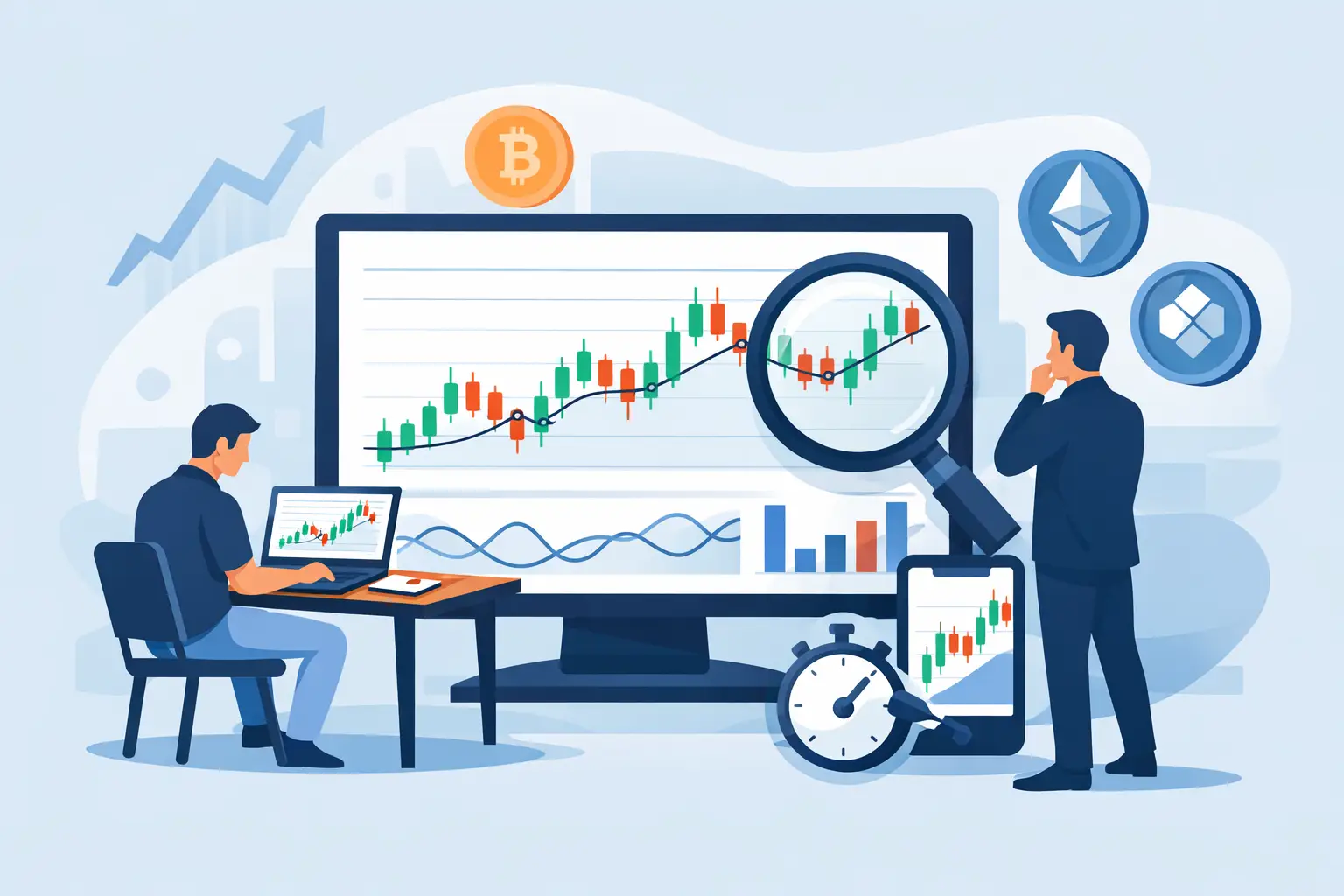
How to Recognize Crypto Pump Groups Before You Buy
A token can rise 80% in an hour and still be a poor trade. The question is not whether price is moving. It is why it is moving, who benefits from that movement, and whether late buyers are supplying exit liquidity. Learning how to recognize crypto pump groups is less about finding one definitive red flag and more about identifying a repeatable pattern: coordinated attention, thin markets, urgency, and a lack of accountable analysis.
Crypto pump groups operate across Telegram, X, Discord, YouTube comments, and private communities. Some are explicit about organizing a timed buy. Others disguise coordination as “research,” “community conviction,” or a sudden wave of independent-looking influencer posts. The presentation changes. The incentives usually do not.
What a crypto pump group is designed to do
A pump group attempts to create rapid demand for an asset, often a low-liquidity token, so early buyers can sell into the resulting price increase. The group may promote a contract address, a ticker, a launch time, or a vague narrative intended to build anticipation before the buying begins.
Not every fast-moving token is a coordinated pump. Major news, exchange listings, genuine protocol adoption, and broad market momentum can all produce sharp price changes. The distinction is evidence. Legitimate interest tends to develop alongside verifiable information, sustained liquidity, and open discussion of risk. A pump relies on synchronized hype and limited time for scrutiny.
For an investor, the practical risk is asymmetric. Organizers and early participants may have accumulated tokens well before the public message appears. Anyone buying after the social surge is making a decision with less information and often worse execution.
How to recognize crypto pump groups in real time
The clearest signals appear when you evaluate the social campaign and market structure together. A single unusual post is not enough. Several signals arriving at once deserve immediate caution.
The message creates urgency but avoids specifics
Pump promotions often use language built to shorten your decision window: “last chance,” “send it,” “next 100x,” “don’t fade,” or “entry now.” The call may include a target price but omit a thesis, invalidation level, token supply analysis, or meaningful downside case.
A credible market commentator can be bullish and still explain the conditions behind the view. Look for a defined catalyst, relevant data, a time horizon, and a clear point at which the thesis is wrong. If the entire argument is price velocity and crowd excitement, it is not analysis. It is distribution.
Multiple accounts post the same narrative at once
Coordination is often visible in the timing and similarity of posts. Watch for several accounts sharing the same ticker, contract address, meme, chart image, or phrase within minutes of one another. This is especially concerning when the accounts rarely discuss the asset before that day.
The accounts do not need to be anonymous to be unreliable. Large followings can amplify a pump just as effectively as new accounts. What matters is whether each source contributes independent reasoning or simply repeats the same promotional message.
The token has weak liquidity relative to its apparent attention
A token can show a large percentage gain while remaining difficult to enter or exit without moving the price. Low liquidity makes manipulation easier because relatively modest buying can produce dramatic charts.
Before acting, compare trading volume, pool liquidity, market capitalization, and spread. A rapidly rising token with shallow liquidity and a concentrated trading venue is structurally more vulnerable than an established asset trading across deep, reputable markets. High displayed volume alone is not a defense. It can be inflated, circular, or concentrated among a small set of wallets.
The chart moves vertically before a public explanation exists
A sharp rise before the promotional wave may indicate that insiders accumulated early. Then the public campaign provides the attention needed for them to sell. This does not prove misconduct by itself, but it changes the burden of proof.
Check the sequence. Did price and volume begin accelerating before influencers mentioned the token? Did the asset retrace immediately after the campaign peaked? A recurring spike-then-collapse pattern is more informative than a single bullish candle.
The group delays the ticker or contract address
Some communities announce a future “signal” and instruct members to prepare funds, turn on notifications, or wait for a countdown. At the designated time, the group releases the asset name and pushes immediate buying. This format is among the most direct warning signs because it is explicitly designed to concentrate demand in a short window.
Do not assume a group is safe because it calls itself educational or limits access through subscriptions. A paywall does not create accountability. The relevant questions are whether calls are recorded, whether exits are tracked, and whether losing trades remain visible.
Check the evidence behind the people making the call
A promotional account’s confidence is not a performance metric. Before assigning weight to a trader, analyst, or channel, assess the full record rather than the most successful screenshot.
Look for timestamped calls, entry ranges, exit updates, position sizing context, and outcomes that can be independently reviewed. A legitimate track record includes losses. An account that deletes failed posts, reposts a move after it happens, or reports only peak gains cannot be evaluated fairly.
This is where historical performance data matters. ROI, win rate, average return, drawdown behavior, and the number of tracked calls provide a more useful basis for trust than follower counts. A high win rate built on a handful of vague calls is not comparable to a multi-month record with clear entries and exits. Likewise, a high ROI may conceal severe volatility or a strategy that requires execution most followers cannot realistically achieve.
Platforms such as My Crypto Monitor are built around this distinction: public influence should be measured against recorded outcomes. Backtested. Verified. Trusted. When a source has no reviewable history, treat the claim as unproven, regardless of how persuasive the post looks.
Use wallet and token data to test the story
Social behavior can reveal coordination. On-chain and market data can reveal whether the token structure makes that coordination dangerous.
Start with holder concentration. If a small number of wallets control a meaningful share of supply, they can create substantial selling pressure when retail interest arrives. Review whether top holders are linked through funding patterns, synchronized transfers, or similar transaction timing. One wallet split into several addresses is still one economic actor.
Then examine liquidity conditions. Determine whether liquidity is locked, how much is available, and whether the team or a privileged wallet can remove it. For newer tokens, contract permissions also matter. Excessive owner controls, the ability to alter fees, blacklist wallets, mint additional supply, or pause transfers can turn a speculative trade into an untradeable position.
These checks do not guarantee safety. They help you rule out conditions where the market is structurally stacked against late buyers. If you cannot verify basic token mechanics, the appropriate position size is usually zero.
Separate a tradeable catalyst from a social-media event
A real catalyst is something that can be examined outside the promotion: a protocol release, audited upgrade, material revenue development, regulatory decision, exchange listing with confirmed details, or a measurable change in usage. Even valid catalysts can be overpriced, but they provide a basis for analysis.
A social-media event is different. It depends on the next post, the next influencer, or the next wave of buyers. It has no durable information advantage because the price action itself becomes the message. When the momentum stops, there may be no reason for new demand to continue.
This is why “community strength” requires scrutiny. A healthy community asks difficult questions, discusses execution risks, and tolerates disagreement. A pump group treats skepticism as disloyalty and uses public excitement as proof that the trade is correct.
A disciplined response when you spot the pattern
Do not rush to expose, confront, or chase a suspected pump. Preserve the relevant details instead: timestamps, original posts, contract addresses, price levels, volume changes, and later deletions. This creates a record you can compare against future promotions.
More importantly, separate observation from participation. You can study a move without buying it. If the setup depends on immediate action before you can review liquidity, ownership concentration, and the promoter’s record, it fails a basic research standard.
The most useful filter is simple: demand evidence before capital. A chart, a viral post, and a confident personality are not evidence. A documented thesis, transparent market structure, and verified historical performance give you something far more valuable - a basis for saying no when the crowd is telling you to buy.
Not financial advice — read our risk disclosure.